Thursday, August 16, 2018


Safarkii Madaxweyn Geel iyo Madaxweynah Somalia ee Geel ku Balan Qaaday Dib u Dhiska magalada Deefow
Safar taariikhi ayaa waxaa maanta ku tagay degmada Beledweyne ee xarunta gobolka Hiiraan wafdi
Ahmed Shide 's Biography and History - Education and Job Experience Honorable A. Shide Hails from the Dir Somali Clan
Ahmed Shide named chairman of the Somali region ruling party
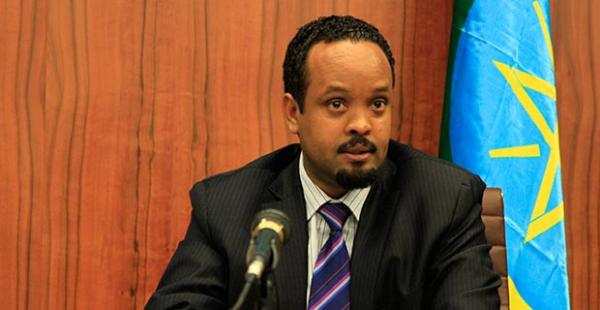
The Ethiopian-Somali People’s Democratic Party (ESPDP) elected the minister of government communications affairs office Ahmed Shide, as chairman, replacing Abdi Mohamoud Omar (Abdi Iley), who was removed from the region’s presidency role few days ago.
Completing its three day party meeting and deep evaluation session, ESPDP has chosen to replace Abdi Iley with Ahmed Shide, the state-linked Fana Broadcasting Corporate reported.
Abdi Iley was a controversial figure who has faced multiple accusations of human rights abuses. The Somali region’s former finance and economic development head Ahmed Abdi Mohamed “Ilkacase” has replaced him as a president. In earlier reports, it was said that Abdi Iley would remain chairperson of the ESPDP and would keep his residence in Jijiga, which have proved to be untrue. There are demands that he stands trial, it is unclear whether that would happen or not.
Ahmed Shide was appointed as communication affairs minister on April 2018 by Abiy Ahmed. Before that, he served as transport minister from November 2016 to April 2018. He was also state minister of finance and economic development of Ethiopia from 2009 to 2016.
Ahmed has earned post graduate diploma in rural resource management and conflict resolution from Institute of Social Studies, The Hague, Netherlands and master’s degree in public participation, development and social progress from Salex University of Briton, UK.
He has served in the Somali region in various roles, such as chairman of pastoral affairs committee of from March 2003 to September 2004, head of the president office from September 2004 to October 2005, and head of civil service improvement bureau from October 2005 to September 2006.
(Main Image: Ahmed Shide.)
https://www.waltainfo.com/news/editors_pick/detail?cid=25505&locale=en&locale=en&locale=en
1 Minster of Transport: Ahmed Shide
Region: Ethiopian Somali
Academic Background:
Post Graduate Diploma in Rural Resource Management and Conflict Resolution from Institute of Social Studies, The Hague, Netherlands.
Masters Degree in Public Participation, Development and Social Progress from Salex University of Briton, United Kingdom
Bachelor Degree in Economics from Ethiopian Civil Service University
On Job Experience:
From December 1998 to September 1999, Senior Economist at Ethiopian Somali Regional State Planning and Economic Development Bureau
From September 1999 to May 2002, Investment Bureau Head of Ethiopian Somali Regional State
From March 2003 to September 2004, Chairman of Pastoral Affairs Committee of Ethiopian Somali Regional State
From September 2004 to October 2005, Head of the President Office of the Ethiopian Somali Regional State
From October 2005 to September 2006, Head of Civil Service Improvement Bureau of Ethiopian Somali Regional State
From September 2006 to March 2009, General Secretary of the Ethiopian Somali People Democratic Party
From September 2006 to June 2009, Head of Pastoral and Rural Development Bureau of Ethiopian Somali Regional State
Senior Advisor to President of the Ethiopian Somali Regional State
Deputy Head of Agriculture and Rural Development Bureau of Ethiopian Somali Regional State
State Minster of the Ministry of Finance an Economic Cooperation since November 2009
2 Minster of Urban Development and Housing,
Ambachew Mekonnen (PhD)
Region: Amhara
Academic Background:
BA Degree in Economics from Ethiopian Civil Service University
Masters Degree in Public Policy and Economic from KDI School of Public Policy and Management, South Korea
Masters Degree (MSC) in International Finance and Economic Development from Kent University, United Kingdom
PhD in Economics from Kent University, United Kingdom
On Job Experience:
From 1991 to 1995, Woreda Administrator
From 1998 to 2001 Head of Amhara Regional State Management Institute
From 2002 to 2005, Head of the Amhara People Democratic Movement Central Committee
From 2012 to 2013 General Director of the Amhara Rehabilitation and Development
From 2014 to 2015 Head of the Amhara Regional State Industry and Urban Development Bureau
Minster of Ethiopian Ministry of Construction since 2016
https://www.ethiopiaobserver.com/2018/08/12/ahmed-shide-named-chairman-of-the-somali-region-ruling-party/ ------https://en.wikipedia.org/wiki/Guradamole,_Somali_(woreda)
Show less
Gurra Clan in Ethiopia’s Somali Region
The Somali region of Ethiopia is one the 9 regional sates that form the Federal Democratic Republic of Ethiopia. It is composed of three layers of administrative structures: namely nine zones, 52 woredas and about a thousand kebeles (the lowest government administrative units). The region has a total population of 4.2 million according to 2007 population census report (CSA 2007). The Gurra clan lives in three woredas namely- Gurra Dhamole, Goro-Baqaqsa and Qarsa Dulla. These weredas are administratively among eight weredas that constitute Afdheer zone in the most southern tip of the region bordering southern Somalia and Kenya.
Gurra Clan in Ethiopia’s Somali Region
The three districts climate is hot and dry with average temperatures ranging from 26 to 30°c. However, Guradhamole can be quite chilly at night as it’s situated at the very foot Dhamole and Habrona Mountains in a narrow valley. In the three districts, two rainy seasons generally occur, the long rains (Gu’) of late March to early June, and the short rains Deyr) of late September to early November. Average yearly rainfall is estimated to range from 600mm-1000mm. 1000 being a good year for the areas neighbouring Bale highlands like in Guradhamole capital, Harodibe.
The three districts cover two ecological zones: the low altitude arid and semi arid, and the mild temperate zones. The arid and semi-arid areas at low altitude of 500 to 800 meters above sea level (ASL) are by far the most predominant and comprise roughly 80 percent of the total land area. The mild temprate zones cover areas bordering Bale Mountains in Guradhamole werda. There are dozens of perennial and seasonal rivers that flow throughout the zone. These are: Genale, Web and tributaries of Genale like Dumal, Mana, Welmal, Dayu and Doya.
Population features and clan composition
The inhabitants of the three districts are ethnically Somalis and it has a mix population of nomadic transhumant pastoralists, agro-pastoralists and petty traders. The latter are mostly returnees who came back home from Somalia republic after 1991change of government In Ethiopia and civil strife in the former. However, pastoralist livelihoods constitute about 90% in Guradhamole while Gorobaqaqsa can be considered a pastoral district with a very small population in the capital and few other settlements like Hargadab and Hagarmoqor. Guradhamole has fast growing agro-pastoral groups due to its rain fall and proxy to other agro-pastoral groups in Oromia neighbouring districts like Harodumal and Dallo-mena where significant Gura clan members reside and practice mixed farming.
The population of the three districts is 113,862 according Central Statistics Authority census of 2007. Qarsadulla is a newly recognized district which has a grate potential for dry land farming providing that basic infrastructure such as roads are developed. Pastoralsim is the main livelihood of the people in the district. However, Guradhamole wereda population census have serious flaw according to local administration and clan leaders and felt far from representing the actual population which puts in doubt the legitimacy of census. The claim is a large portion of the wereda population has not been counted due to the erroneous map that was used by Central Census Authority.
There is no reliable data of livestock population in Somali region as whole besides mere estimates. So in the three weredas according to elders each Gura household have on average 20 camels, 10 cattle and 50 Shoats. Therefore, total livestock estimates are 378,860 camels, 189,430 cattle and 947,150 Shoats.
Clan compositions in the three weredas (districts)
The clan composition inhibited in the three weredas is Gurra which is majority clan that belongs to Somali wider Dir family. There are also minority Somali clans like Dhaweyd, Adjuran , Karinlle and Asharaaf. Some of the clans including Gurra are bilingual communities that speak both Oromo and Somali languages of the eastern Cushitic linguistic families.
Historical events
Major events in the three weredas from the time of Emperor Menilik expansion towards the south and east, are related to resource and way of life protection wars. Around 1887 Guras along with other Siko-Menda clans fought the expansionist Emperor Menilik army at Magaalo near a well known Sofi-Omar cave. Particularly, Gura suffered heavy causalities from the modern weapons used by their opponents weakening severely their military capability. There was also long standing pastoral conflicts with a branch of Ogadeni clans over livestock raiding mainly camels recorded according to Gura oral history that caused displacement and migration from grazing land and sorghum farms in the Bakol valley.
The three weredas also shares and has a long history of insurgency resistance and popular movements that highly influenced its history with Ethiopian state. The popular Bale up raises known as Ijoole Bale (The Children’s of Bale) and the subsequent Liberation movements by joint effort of Somali and Oromo groups supported by Somali republic can be sighted as an example. 1964-1979 –Ethio-Somali contestations and wars over territory has marked the history of the clan and the adjacent areas. This era is known as the era of fire arms. For example the brand of arms introduced to the area gets its name for that decade, Jaan Cadde, Dhoobir, AK etc..
1991 – 2009 with the change of Government in Ethiopia marks special historical venue in the Gurra clan area. Huge population of returnees coming to the area from Somalia refugee camps and the introduction of Federal system in Ethiopia constitute contemporary history.
On the other, ethnic based administrative regions establishment brought both opportunities and challenges to the people of Gurra as also true for other communities in Ethiopia. The federal system provides opportunities to self rule that many sacrificed their dear life for it and introduced social services unknown to inhabitants in their history. In the process of constituting Federal system that resulted in turn the disintegration of old identities and reconstitution of new ones some violent conflicts affected the Gurra clan relations with clans that they used share common pastoral resources.
Minister of Government Communication Affairs Office

Wednesday, August 15, 2018
Barsuuk Dabruube Madeluk Bajimaal Peoples of the Horn of Africa (Somali, Afar and Saho): North Eastern ..., Part 1 By I. M. Lewis
Peoples of the Horn of Africa (Somali, Afar and Saho): North Eastern ..., Part 1
By I. M. Lewis
The bursuk are a small Dir tribe to the east of Harar and are mainly cultivators. According to Burton, payment of blood-compensation is unknow amoungst them and fighting does not give rise to the interminable feuds characteristics of the nomadic Somali.
Other Dir groups which have not succeeded in maintaining their tribal autonomy so successfully as the Bimal in their dispersal from the north, are the Dabrui ( Dabruube) living amoung the Bimal of Merca, the Bajumal amoung the Shebelle Negroids, the Gorajno with the Garre, the Madaweni amoung the WaGosha and in Abyssina, and the Madeluk found amoung the Ogaden, Helai, Shebelle, in Jubbaland and at Serenlei and Margherita.
By I. M. Lewis
The bursuk are a small Dir tribe to the east of Harar and are mainly cultivators. According to Burton, payment of blood-compensation is unknow amoungst them and fighting does not give rise to the interminable feuds characteristics of the nomadic Somali.
Other Dir groups which have not succeeded in maintaining their tribal autonomy so successfully as the Bimal in their dispersal from the north, are the Dabrui ( Dabruube) living amoung the Bimal of Merca, the Bajumal amoung the Shebelle Negroids, the Gorajno with the Garre, the Madaweni amoung the WaGosha and in Abyssina, and the Madeluk found amoung the Ogaden, Helai, Shebelle, in Jubbaland and at Serenlei and Margherita.
Sunday, July 29, 2018
The Geledi Confederacy of 16 Clans Attempt to Destroy The Bimaal Dir .
The powerful Bimaal even though surrounded by powerful none Dir forces they always maintained their independency and preserved their identity unlike some other Dir groups who succumbed to their enemies. Only the Surre Dir clan can rival the Bimaal in terms of survival and tenacity to resist all obstacles.
1750 The Geledi Sultanate, later know as Afgoy, emerges in Ay Ulay in the Southern Shabelle Valley.
1819 Sh. Ibrahim Hassan Yeberow establishes a reformed Jama’a in Bardheere in Upper Jubba region.
1848 The sultan of Geledi, Yusuf Mahamud, is killed at Adaddey Suleyman, a village near Marka, in a battle between the Bimaal and Geledi confederacy of 16 clans deep in Bimaal territory.
1878 Second Sultan Ahmed Yusuf is killed at Agaaran, near Marka, by the Bimaal. The Geledi army retreats.
Sultanate of the Geledi
The Sultanate of the Geledi (Somali: Saldanadda Geledi,
Arabic: سلطنة غلدي) was a Somali kingdom
that ruled parts of the Horn of Africa during the late-17th century and 19th
century. The Sultanate was governed by the Gobroon Dynasty. It was established
by the Geledi soldier Ibrahim Adeer, who had defeated various vassals of the Ajuran
Sultanate and founded the House of Gobroon. The dynasty reached its apex under
the successive reigns of Sultan Yusuf Mahamud Ibrahim, who successfully
consolidated Geledi power during the Bardera wars in 1843,[1] and Sultan Ahmed
Yusuf, who forced regional powers such as the Omani Empire to submit tribute.
The sultanate was eventually incorporated into Italian Somaliland in 1908, and
ended with the death of Osman Ahmed in 1910.[2]
At the end of the 17th century, the Ajuran Sultanate was on
its decline, and various vassals were now breaking free or being absorbed by
new Somali powers. One of these powers was the Silcis Sultanate, which began
consolidating its rule over the Afgooye region. Ibrahim Adeer led the revolt
against the Silcis ruler Umar Abrone and his oppressive daughter, Princess
Fay.[3] After his victory over the Silcis, Ibrahim then proclaimed himself
Sultan and subsequently started the Gobroon Dynasty.
Geledi Sultanate was a Rahanweyn Kingdom ruled by the noble
Geledi clan which controlled the entire Jubba River and extending parts of
Shebelle River and dominating the East African trade. The Geledi Sultanate had
enough power to force the southern Arabians to pay tribute to the noble Geledi
Rulers like Ahmed Yusuf (Gobroon).[4]
Military
The Geledi army numbered 20,000 men in times of peace, and
could be raised to 50,000 troops in times of war.[5] The supreme commanders of
the army were the Sultan and his brother, who in turn had Malaakhs and Garads
under them. The military was supplied with rifles and cannons by Somali traders
of the coastal regions that controlled the East African arms trade.
The Ten Subclans of Degodi are: Tobanka Jilib ee Digoodi
The Degodia clan is made up of 10 sub-clans1 which are
present both in Kenya and Ethiopia but with traditional leadership structured
and bases in Ethiopia Filtu area. In Mandera County they are predominantly
found in Banissa District in Guba and Malkamari division, and in Mandera North
in Rhamu,Rhamu Dimtu, Olla and Ashabito division.
The general migration is ideally within Wajir East, Wajir
West and some few sections of wajir North in Wajir county; Mandera North and
Banisa district in Mandera county in Kenya and Dolo Ado and Filtu Woredas in
Ethiopia.
The Ten Subclans of Degodi are:
Jibrail, Fai, Dumal, Masara, Radayi, Abrisha, Idiris,
Walajela, Rermohamud and Abadwada
Subscribe to:
Posts (Atom)