The Adal empire


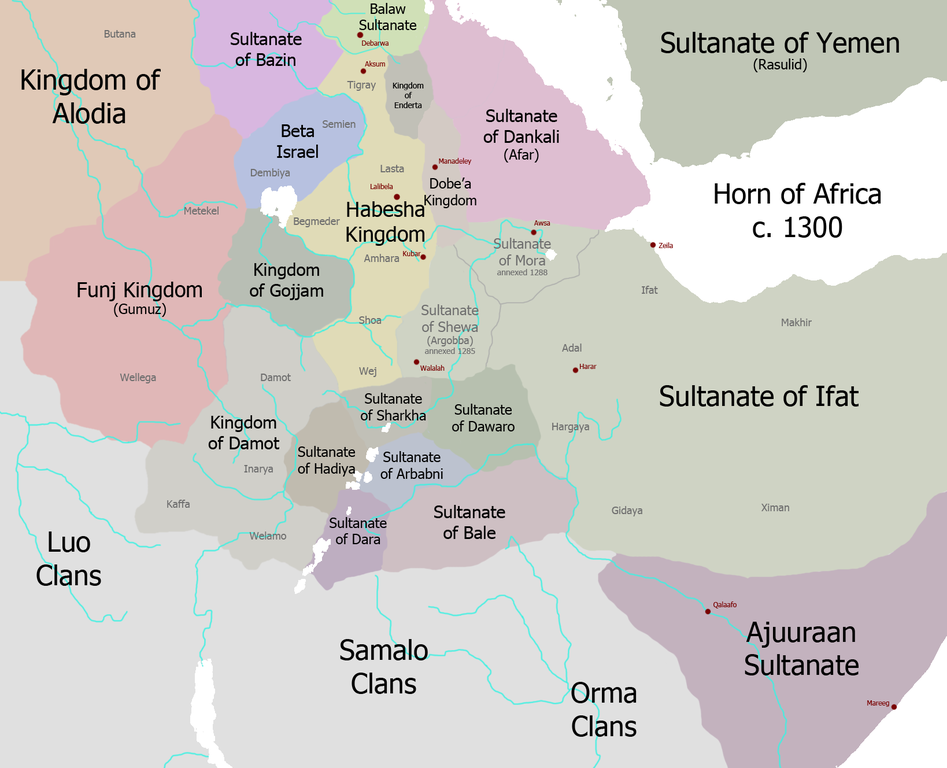
In a book titled “Masaalikal-Absaar”(this is in Somali spelling), the Egyptian author, Subhul Ahsha mentioned that Zeyla was the nucleus city of Adal Empire. Continuing into the description of this city, he added that Zeyla was “The City of Light”, which had many Mosques and many schools, where all kind of subjects were taught. In fact, Mr. Ahsha described Zeylac as “The Place” where one can acquire any kind of knowledge that may be taught in that period of time. The author added in his description that the people were 100% Muslim. Mr. Ahsha said that they were gathering in large number into the Mosques of the city, as faithful believers to Islam. According to this writing, these Mosques could be compared to the municipal libraries that can be found today in big cities of our century. In addition of that, schools were places where people use to enjoy meeting, share knowledge, discuss about social issues and debate intellectually. As a matter of fact, Zeyla was known as the place where the knowledge was at the merci of everyone.

Remarked by its faithful actions, other Islamic States in the world called Adal Empire “Diraasal-Islaam”.
The Walashma dynasty was a Somali Muslim noble family who ruled parts of what is now eastern Ethiopia, Djibouti, southern Eritrea and western Somalia. The earliest known member of this family was Umar ibn Dunya-huz (died 1275), whose son Ali ibn Wali Ashma conquered the Muslim kingdom of Shewa.
List of rulers of the Walashma dynasty
Haqq ad-Din I
Sabr ad-Din I
Jamal ad-Din I
Ali ibn Sabr ad-Din
Ahmad ibn Ali
Haqq ad-Din II
Sa’ad ad-Din II
Sabr ad-Din II
Mansur ad-Din
Jamal ad-Din II
Badlay ibn Sa’ad ad-Din
Muhammad ibn Badlay
Shams ad-Din ibn Muhammad
Muhammad ibn Azhar ad-Din
Abu Bakr ibn Muhammad
Umar Din
Ali ibn Umar Din
Barakat ibn Umar Din
Adal declined because of the oromo expansion and the rivalry between kings of the adal empire which resulted in it’s political power to end in the 1700’s

Qabrigii Awoow Imam Nuur Harar




Ahmad ibn Ibrihim al-Ghazi (c.1507 – February 21, 1543) was a Somali Imam and General who defeated several Ethiopian emperors and wreaked much damage on that nation. He is also known as Ahmad Gurey, “Ahmed the left-handed”.

the daughter of governor Mahfuz of Zeila. When Mahfuz was killed returning from a campaign against the Ethiopian emperor Lebna Dengel in 1517, the Adal sultanate lapsed into anarchy for several years, until Imam Ahmad killed the last of the contenders for power and took control of Harar.
In retaliation for an attack on Adal in 1527-8 by the Ethiopian general Degalhan, Imam Ahmad invaded Ethiopia in 1529. Although his troops were fearful of their opponents, and attempted to desert upon news that the Ethiopian army was approaching, Imam Ahmad relied on his elite company armed with matchlocks, and defeated emperor Lebne Dengel at Shimbra Kure that March.1
Imam Ahmad campaigned again in Ethiopia in 1531, breaking Emperor Lebna Dengel’s ability to resist in the Battle of Amba Sel on October 28, then marched north to loot the island monastery of Lake Hayq and the stone churches of Lalibela. When the Imam entered the province of Tigray, he defeated an Ethiopian army that confronted him there, and on reaching Axum destroyed the Church of Our Lady Mary of Zion, in which the Ethiopian emperors had been coronated for centuries.


He was born near Zeila, a port city located in northwestern Somalia, and married Bati del Wambara,
the daughter of governor Mahfuz of Zeila. When Mahfuz was killed returning from a campaign against the Ethiopian emperor Lebna Dengel in 1517, the Adal sultanate lapsed into anarchy for several years, until Imam Ahmad killed the last of the contenders for power and took control of Harar.
In retaliation for an attack on Adal in 1527-8 by the Ethiopian general Degalhan, Imam Ahmad invaded Ethiopia in 1529. Although his troops were fearful of their opponents, and attempted to desert upon news that the Ethiopian army was approaching, Imam Ahmad relied on his elite company armed with matchlocks, and defeated emperor Lebne Dengel at Shimbra Kure that March.1


Things changed when the Portuguese paid a visit to the court of Emperor Lebne Dengel, in 1492
… Ahmed Gurey improved his victory by chasing the young Claudius (king of Ethiopia) over Abyssinia, where nothing opposed the progress of his arms. At last the few Portuguese survivors repaired to the Christian Emperor, who was persuaded to march an army against the King of Adal (Ahmed Gurey) . Resolved to revenge their general, the harquebusiers demanded the post opposite Mohammed, and directed all their efforts against the part where the Moslem stood. His fellow religionists still relate that when Gurey fell in action, his wife Talwambara, the heroic daughter of Mohfuz, to prevent the destruction and dispersion of the host of al-Islam, buried the corpse privately, and caused a slave to personate the King, until a retreat to safe lands enabled her to discover the stratagem to the noble.
thus after a 30 yr jihad the King of Adal perished
Ahmed was succeeded on the throne of Adel by Amir Nur,
son of Majid, and, according to some, brother to the ‘left-handed’. He proposed marriage to Talwambara, who accepted him on condition that he should lay the head of the Emperor Claudius at her feet. In AD 1559, he (Amir Nur) sent a message of defiance to the Negush (Ethiopian Emperor Claudius) who, having saved Abyssinia almost by a miracle, was rebuilding on Debra Work, the ‘Golden Mount’, a celebrated structure which had been burned by the Muslims. Claudius despising the eclipses, evil prophecies, and portents which accompanied his enemy’s progress, accepted the challenge.
son of Majid, and, according to some, brother to the ‘left-handed’. He proposed marriage to Talwambara, who accepted him on condition that he should lay the head of the Emperor Claudius at her feet. In AD 1559, he (Amir Nur) sent a message of defiance to the Negush (Ethiopian Emperor Claudius) who, having saved Abyssinia almost by a miracle, was rebuilding on Debra Work, the ‘Golden Mount’, a celebrated structure which had been burned by the Muslims. Claudius despising the eclipses, evil prophecies, and portents which accompanied his enemy’s progress, accepted the challenge.
Claudius, supported by a handful of Portuguese, were soon slain around him, and he fell covered with wounds.
Amir Nur cut off his head, and laid it at the feet of Talwambara, who, in observance of her pledge, became his wife. Talwambara suspended the trophy by its hair to the branch of a tree opposite her abode that her eyes might be gladdened by the sight; after hanging for two years, it was purchased by an American merchant, who interred it in the sepulcher of St. Claudius at Antioct.
The ultimately the death of Ahmad Gurey was a very great blow to the Somalis. His wife and her new husband Amir Nur continued fighting for seven years with the Ethiopians, but they were in fact pushed from Addis Ababa to the border near river Haiwaish (‘Awash’) because of the Portuguese help to the Ethiopian Guerillas.
After seven years of fighting. Amir Nur and his wife withdrew to their previous headquarter at Harar and again Harar became the principal Somali city. When she died, her son Amir Abdullahi succeeded. His dynasty ruled Harar till 1884,


Amir Nuur and The Infamous Wall Of Harrar
Harar while not a city in Somalia was a city founded (for the most part) by a Somali Muslim dynasty known as the Wilinwili/ Walashma who ruled over the Ifat and Adal Sultanates. It's famous encircling wall was built under the orders of Nur Ibn Mujahid, a Somali...
Harar was once a great holy city of Islam. It's wall penetrated by five gates for the Five Pillars of Islam; within them were 99 Mosques for the 99 Names of Allah. Today only 82 of those Mosques stand and the city is a pale reflection of its former self. It was torn apart and rotted largely due to switching hands from Muslim dynasty to Muslim dynasty and also at certain points and finally coming into the hands of the Abyssinian Empire. It is today a UNESCO World Heritage Site in Ethiopia.
The wall was built to Protect inhabitants of the city from Invaders(Particurlarly Oromo and Christians)
Amir Nuur abolished all genealogies so that the people in the city of Harrar could be all considered equal as ''Harraris''
Amir Nuur abolished all genealogies so that the people in the city of Harrar could be all considered equal as ''Harraris''
The Cannon That Was Used During The Conquest!
Ahmed Gurey was the first commander to use cannon warfare on the continent during Adal's conquest of the Ethiopian Empire
Ahmed Gurey was the first commander to use cannon warfare on the continent during Adal's conquest of the Ethiopian Empire


